Mountain Sports
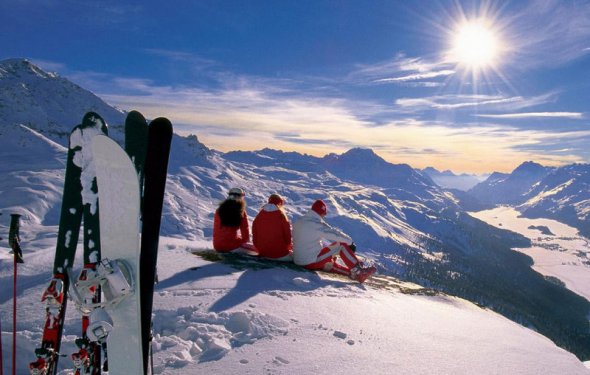
They've been going to the mountain for a long time, but not to conquer it, but to come down quickly.
They've been going to the mountain for a long time, but not to conquer it, but to come down quickly. And not just like that, but on skis and on the most uncomfortable and unprepared tracks. That's the point of squi-alpinism. To be the champion of this sport, we need to have the Frireid tech at the same time and be an experienced alpingist. Today, this most sophisticated sport is rapidly gaining momentum around the world. Perhaps the main reason for his popularity is that he gives his fans a completely new form of freedom. Now they are not dependent not only on track preparation, but also on lifts and on any mining infrastructure. From now on, they can fight snow slopes everywhere and everywhere.
Sporting ski-alpinism is still very young. He was born in the Alps in the 1990s at the junction of mountains, running skis and alpineism, and the first world champion was held in France only five years ago. Today, world and European primaries, national champions and cubs are held annually. The competition usually takes place in several disciplines. Vertical race is a rapid rise in the mountain on a prepared track with a set of 900-1100 metres. The best athletes have traveled this way in only 40 minutes. An individual race is a longer distance (up to 24 kilometres) with several lifts, launches and a total set of up to 2,200 metres. There is also a command race in which the participants cross the track in two ways, and the estafete, when three to four people are on line on the ring route with two ups and downs. But perhaps the most interesting thing is Rally. They differ from conventional competitions with a larger route (up to 60 kilometres), complexity and diversity of the track. Rallie participants need to climb up to a few peaks, launch steep wholesal, shed snow slopes, go through narrow ridges, overcome scal and ice areas, closed glaciers. And it's all at the highest speed in the nun-stop mode. Rallie's not part of a series of clubs and championships, and they're much older than squi-alpinism as an officially recognized sport. h3. According to the traces of Ottorino Mezzalama, the most famous of these races, Trofeo Mezzalama, has been held in Italy since the 1930s and has the name of the famous Italian skier and alpineist Ottorino Metzalama. During the First World War, he celebrated the fact that he had skied several battalions of soldiers responsible for exploration, communication and security in the mountains, and in peacetime he had relentlessly studied the native Alps by laying paths for future skies. Trofeo Mezzalama is one of the biggest rally today. This year, more than 200 teams of three people participated in the project (most of athletes are required to pass through the interconnection with the rope). The 40 km route is approximately 4,000 metres and above, with a total of 2,800 metres. The best crews are crossing this hardest route in four, five hours. The competition is run by FISI (Italian Federation of Winter Sports) and the sum of prizes here are quite large for a sport such as Skee-alpinism. The fastest men ' s team gets 8,400 euros, and women receive Euro3,300. Special prizes for Euro 1,500 are awarded to the oldest and youngest teams. However, in order to fight for these monetary awards, each troika must make a total initial contribution of Euro450. h3. The Lead Patrol in Trofeo Mezzalama ' s Skee-alpinist Events calendar is running with the Patrouille des Glaciers. These competitions take place every two years in Switzerland. Between the start-up in Cermatte and the Finische in Verbier, participants are moving away from a distance of 53 kilometres, with a range of almost 4 kilometres. It has been overcome in 6, 5 hours when circumstances are successful. The normal number of participants in the Patrouille des Glaciers is about a thousand in three teams. For the first time, these competitions were organized as military exercises at the end of 1930-1940. At the end of the next decade, after the crackdown and the death of three participants, they were stopped. However, almost forty years later, in 1984, the Led Patrol race was revived and security issues are now being given the highest priority. Ralli was 12 times in 2006. The night vengeance of the Pierra Menta race in French Alps can be described as the most complex and inspiring: in four days, athletes must recruit 10,000 metres vertically. According to the participants, " it is only on the first day, and then on how to survive until the finish. " The Sellaronda round race is also a genre classic. The distance crosses the Dolomita, passing through the ring route around the vast cafeteria of Sella. That marathon's raisin is that he's doing it at night. The illumination is very effective: the ridges of the surrounding mountains are decimated by a live illumination from a long moving chain of pumped lamps. This year, Italians hit previous trails, hit 42 kilometres of distance and 2,700 metres of height in 3 hours and 20 minutes. h3. The first place in the world ' s table of ski-alpineism is traditionally occupied by athletes from the Alpine countries, France, Italy, Austria and Switzerland. The inhabitants of the plain latitude, who are unable to practice in the mountains every day, of course, cannot constitute serious competition. Russian ski-alpinists, therefore, traveling to international competitions as long as they are more modest in their tasks, to pass the entire distance and, if possible, not to be the last place. The only way to achieve serious results in this sport is to go to the mountains. That's what Gennadi Sibaev's magnetore did. Since recently, he has been living in New Zealand and has already been able to become an absolute leader of Skipping Alpineism, winning three of the four phases of national ownership this year. h3. Russia ' s first experience of ski-alpinism does not yet have such rich traditions as in Europe. Russia ' s first bow was held in Hibinah, the Kolo Peninsula, in 2004. The Murmansk region ' s Alpine Federation was able to organize clean leaf contests at a very decent level. Last year, at least a well-organized championship was held at Ural, Magnitohorsk. Two years later, Skee-alpinists competed on the Camchatka during the traditional Avacin Marathon. Also, the ski-alpinisms on the Moscow Cup take place at the Moscow Mining Club Kant. There's a lot of athletes involved in the runs, but it's, of course, just a little light-minded than big competitions. As long as Russia is trying to learn this difficult but very exciting sport. One of the Pyongers of Russian Ski-alpinism Sergei Romanov and his teammate Camp-Alpindustria Viacheslav Kurchakov told BOLSHOI about the prospects for this sport in the West and Russia. I mean, it's not for no reason that smart people don't go to the mountain, especially skis. * Vyacheslav Kurchakov (VC)*: What's that? Free. You can go anywhere you want and on your own, go to new beautiful places, ride on purpose and not depend on lifts or helicopters. And you don't have to pay a lot of money for that. And competition is an incentive for continuous improvement. If we were just riding for our pleasure, we wouldn't have any equipment like this. It's easier, more comfortable, more functional. Technology is rapidly evolving and yields the highest results. Another important point is familiarity with interesting people, other countries. And then, squi-alpinism is like a multisport, and there's ski runs, and ice, scalp, and mining. Of course it's very hard. There's a huge cost, a power of will. White people are climbing up on the top of the helicopter, happy and full forces float clean, furious. And you with wooden legs barely crawling on the mountain, tongue on your shoulder, and you ride down the burglary, trails, broken tracks. But Western athletes show fantastic results. And after the clock lift, they continue to go upwards so that they will not be repressed with fresh force. And let's go where we stop for a few times, they're going with one fur. Of course, in order to achieve some results, you have to devote yourself to training, quit your job, family, then maybe you'll be in ten. What are the prospects for Russian squi-alpinism? In all mountain countries, including Slovakia, the Czech Republic, Poland, people are beginning to engage in ski-alpinism from childhood, sections are even in many schools. We have no training system yet. All Russian ski-alpinists are scholars coming from other sports: mountains, skis, alpineism. The best results we've got are the plains of skies, they're much more and stronger than the others. There's more chance among the alpines of those who do velocity resurrections. But it's very difficult for us in the plains to compete with European athletes. In the West, it's very popular. They have a lot more people to do than go to competition. Even in a mass buyer-oriented store, Decathlon sells specialized equipment. In the Alps, people go to the mountains like we go to the woods for the weekend. And our mountain areas are so undeveloped that there is no mass to talk about. Who's in charge of a competition in Russia? One of the reasons for this is that we have virtually no one to participate in them: strong, worthy sportsmen in Russia. And the levels are prepared on lower tournaments. And now that we get the level when the contests go into the official sports committee calendar, then there's probably also funding. So far, regional alpine federations are self-sustaining. For example, in Magnitohorsk, under the auspices of the local alpine club, Gennady Kirievsky and Sergey Soldatov organized an excellent championship almost for their money. And the sponsors don't support Russian squi-alpinism? In many countries, ski-mountaineering is sponsored by large equipment manufacturers. But as long as we have ski-alpinism, we have a small company of enthusiastes, so outdoor firmas don't rush to invest in it. Our team with the competition equipment was partially assisted by Italian Samp, but skis and shoes still had to be bought by themselves. Alas, as long as squi-alpinism in Russia is held exclusively on the naked enthusiasm. - h3. The victory of the Priz for the will to win is the award received by the Russian assembly at the last European Championship on Skipping Alpineism, held in March 2007 in the French resort of Morzin-Avoryas. Six athletes fought for Russia ' s mountainous honour, and in a general rating of 21 countries, the Russian team occupied the 15th place. This may be a very good result, since the requirements for participants have increased significantly this year. The championship programme included four races, vertical, command (distance 20 kilometres), individual and estaphate. As always, sportsmen from France, Italy, Switzerland and Spain took the lead. - h3. Of course, a special type of sport, such as squi-alpinism, requires very special equipment. Ski-alpine skis weigh less than a kilo and much shorter mountains: men have 160, women have 150 centimeters. Their sliding surface is marked with a camus, a synthetic tape with a directional thorce that allows for moving forward, but does not skid backwards. The " free slick " and the " fixed slick " for the downhill have two basic provisions to the maximum light, non-weighted " anchorages. The boots are also very light, with the charniers that provide free work of the holenostope on the rise. Before the downing, a special switch (hot/ski position) shall be fixed at a certain angle. If necessary, they shall be fitted with " boxes " , which, together with self-care, carabine, lavin sensor, tamper and scapula, are also included in the mandatory kit of athletes.